Monday, August 19, 2019

Sermon Snippets - Getting a reputation


When you've been labeled a certain way, it gets hard to shed that reputation. Sometimes those are earned. But I've recently been thinking about how many times in my life I believed something about someone based on no evidence at all and/or because all my peers did.

This has all been provoked by my current sermon series on misunderstood women of Scripture. All of these characters have been unfairly maligned to one extent or another, but this past week when we looked at Mary Magdalene was a doozy.

She's been cast as a everything from a reformed prostitute to Jesus' secret wife. None of these theories are rooted in Scripture though. Luke 8 mentions her as a close follower of Jesus who had been delivered from demonic possession. But there's nothing about sexual immorality or anything of that kind in any of the Gospel accounts which never hold back on people's sin. 

In reality, she demonstrates a high-level of devotion both as a student and a supporter of Jesus. Her life was a dramatic witness to Jesus' divine power and she was undoubtedly a key source for the Gospel writers as they compiled their accounts of Jesus' life. 

She's an example of how God can transform us, just not in the scandalous way we've been led to believe. And she's also an example of how we can faithfully follow Jesus as disciples.


Image result for mary magdalene
Renaissance artists helped perpetuate these myths about Mary Magdalene, portraying her in a penitent-but-sensual light.

FWIW, this all started (probably), with a sermon Pope Gregory gave in AD 591. He confused and conflated a couple different stories of a couple different women (Luke 7, 8, John 12) and made them all about Mary M. 

Monday, August 12, 2019

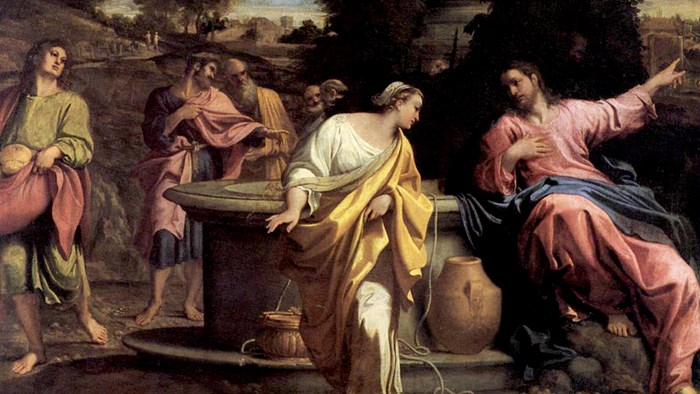
Sermon Snippets - The Woman at the Well

See if you can spot the lie:

  • Bats aren't actually blind. Some can see better than humans.
  • Napoleon was above-average in height for his day.
  • We don't have five senses, we have closer to twenty.
  • The woman Jesus interacts with at a well in Samaria was a promiscuous relationship-addict who went from one man to another looking for the right guy.

If I haven't made it obvious, it is the last bullet point. Don't believe me about the first three facts? I refer you to this resource. Don't believe me about the last one regarding the story from John 4? Let me refer you to this article (and/or the Sandra Glahn-edited book "Vindicating the Vixens" which features that same article as one of it's chapters).

The article makes a compelling case that when we study the marriage practices of the Biblical world, we'll see this woman in a very different light. 

Was the Samaritan Woman Really an Adulteress?

During her famous discussion with Jesus, he reveals that he supernaturally knows she has been married five times and is living with a man who isn't her sixth husband. It doesn't indicate she was divorced that many times - which would be unheard of when we compare it to other ANE (Ancient Near East) records we have. And even if she had five divorces on her marital resume, in their world, it was rare for a woman to divorce her husband. Women had next to no legal rights and would have to find a male advocate to initiate these proceedings. Men on the other hand could find lots of excuses to divorce their wives. Though they would suffer dowry loss for any reason other than adultery. A dowry was the material wealth a woman brought into the marriage. It was the only lifeline a woman had to protect her if her husband decided to abuse the system. 

So that brings us to this woman in John 4. which is more plausible? That she was the town tramp who hopped from bed to bed looking for love in all the wrong places? Or that she had husbands who died and/or husbands who had divorced her? That her current living situation was one of illicitly co-habiting or one where culturally they were seen as married? Or maybe it was a situation of bigamy, where she was like Hagar, essentially a second (class) wife. Her townspeople receive her testimony without reservation when she tells them of her interactions with Jesus. The eager reception and the lack of skepticism or hesitancy help convince me that she wasn't wearing some 'scarlet letter' in their minds.

John 4 is a lot less scandalous when we understand the historical context. Her theological curiosity and insight rise to the surface upon deeper reflection too. Maybe she wasn't thirsty for love but rather thirsty for healing and the truth. 

What is also unmistakable is the fact that Jesus satisfies her longings. She didn't even fully understand what she was searching for, but Jesus provided it in abundance. He reached across social barriers and sidestepped needlessly distracting controversies. And he did it all to bring salvation to that woman and her town. 

The beautiful thing is, that previous paragraph also applies to you and me. He quenches our thirst and he compels us to disregard the barriers and reach out to those around us with the offer of living water found only in Christ.

Tuesday, August 6, 2019

Music Mondays - Best Movie Ending Songs (#5-#1)

5. Napoleon Dynamite, "The Promise", When in Rome

A sweet, quirky, funny movie stumbles into a pitch perfect song to end the story. "The Promise"is a quintessential 80's song and Napoleon Dynamite takes place in a world seemingly stuck in the 80's. Both the story and song have a lot of heart though. 


4. Stand by Me, "Stand By Me", Ben E. King


This is a quintessential "coming of age" movie and the ending hits you right in the gut. Clearly they had no other choice to play this song at the end. But they certainly earned it.

3. Lone Survivor, "Heroes", Peter Gabriel

Another ending that hits you right in the feels. Lone Survivor is a harrowing account of a Special Forces operation in Afghanistan. When Gabriel's version accompanies pictures and videos of the soldiers portrayed in the movie, the gravity of the movie becomes all the more real. 


2. Fight Club, "Where is My Mind?", The Pixies

Fight Club is a crazy movie with an all-time twist ending. So how do you go out with a bang? Go with The Pixies' haunting and lyrically-nonsensical "Where is My Mind?" A match made in metaphor heaven.


1. The Breakfast Club, "Don't You (Forget About Me)", Simple Minds

Is there a more iconic closing frame than Judd Nelson in The Breakfast Club? John Hughes had a knack for blending the right songs with his great stories. This is the best movie-ending song ever. There's a reason a music-centered movie like Pitch Perfect makes a whole thing of it.


Tuesday, July 30, 2019

Music Monday (on a Tuesday) - Best Movie Ending Songs

I believe it was watching the end of Stranger Things season 3 that inspired me to figure out my top 10 favorite songs that come up at the end of movies.

Admittedly this is a bit obscure but again, Stranger Things' finale had a powerful moment with Peter Gabriel's "Hero" and it got my mind wandering down this rabbit hole. My evaluation is based off how well the song fits with the overall tenor of the movie. A fun movie ought to have a memorably fun song. A dramatic movie should have a powerfully evocative number to punctuate the finale.

This week, I'll cover songs 10-6 and finish it off next week. By the way, a lot of the videos I'm including have spoilers...so you've been properly alerted.

10. Edge of Tomorrow, "Love Me Again", John Newman.

Ok, I'm going to cheat on #9-10 because these songs technically play right as the credits roll. But especially in this case, it's a fun song that matches what was a surprisingly great movie. I first liked the song because of it's original music video which is an homage to Romeo and Juliet. And while this movie really doesn't have any romance, the song just fits the energy of the Tom Cruise pic.


9. Oceans 11/ The Bourne Identity - "69 Police" David Holmes, "Extreme Ways" Moby. 

Up until I fact-checked this five minutes ago, I was under the impression that Moby wrote both of these songs. Whatever genre it is, you can inject it straight into my veins at the end of these movies because they just ooze "cool".


8. The Graduate - "The Sound of Silence", Simon and Garfunkel

This is a classic final scene well staged and well acted. And the cherry on top is Simon and Garfunkel's classic ballad.


7. Heat - "God moving over the face of the waters" - Moby

This is one of my all-time favorite movies (don't watch the first five minutes of the video below if you don't want it spoiled though). There's something gratifying, honorable, and powerful about this instrumental by Moby. The movie earned this ending and this ending earns this song...if that makes any sense.


6. Drive - "A Real Hero", College Electric Youth

Drive is an unique movie to say the least. But it's really more stylish than strange because of it's soundtrack. It's capped off perfectly by this song. I don't know who College Electric Youth are or where they are from, but it feels like this song was created to play during this exact scene and at the conclusion of this particular movie.


Thank you for indulging me in this little vanity project. More to come next week!

Monday, July 22, 2019

Gen Con reflections and quotes

We just returned from our Brethren Church National Conference which was held at the beautiful and spacious Ridgecrest Conference Center outside of Ashville, North Carolina. 

It was a busy week so we took our time coming back this weekend and made it a mini-vacation which was a good decision. Having some time to reflect on the conversations, meetings, and sessions I thought I'd share some of the key quotes I am taking away from this year's gathering. 

It turns out all of these are from our main speaker, Karl Vaters, who is an author, pastor, and expert on small churches. He proved to be a perfect fit for who we are and where we are at as a denomination. 

A little background, The Brethren Church traces its roots back to 1700's Germany when a movement was birthed out Anabaptism and Radical Pietism. Fleeing hardship and persecution, these original Brethren moved to the American colonies and continued many aspects of their spiritual and social lifestyle including being agrarian (farming) people and remaining German-speaking for many years. These preferences led them to starting churches in rural areas to begin with. And while various groups have splintered off and no longer maintain this path, it still provided the foundation for where we began and where our churches were planted. Because our specific denomination did not dramatically change course we remain in mostly rural areas with mostly smaller churches (50-150).

And here is where the Conference's themes and Vater's expertise comes in to play:

"Small is not a problem, virtue, or an excuse."

IKEA and Starbucks are both wildly successful businesses with vastly different business models (h/t to Vaters for this genius analogy). We don't have to compare ourselves with bigger ministries and we don't have to arrogantly believe we're better because we "provide a better personal touch."

"A healthy church will not necessarily experience numerical growth."

Numbers may accompany healthy ministry, but not always. We need to divorce ourselves from the assumption that numbers equal health and health equals numbers. More quotes to come, after the break...

Monday, July 1, 2019

Music Mondays - Can a heretic still teach (or sing ) God's truth?

I came across this article over the weekend and there were parts I liked and others I didn't like. I agreed with some of it and disagreed with enough of it that I began formulating a response in my head that I realized would make a good Music Monday post.

Now I fully admit critiquing another's critique may be a low-brow approach in a form (blogging) that is already low-brow. But my aim is not to trash anyone's opinion. only to critically think through this issue - and do so within the parameters the author himself sets. Let me also admit at the top that I own 1 song by Bethel on iTunes ("You Make Me Brave") and I'm not sure our church has ever used their music.

To sum the article up, or just give you a TL;DR version, the author uses the following four questions to ultimately conclude that churches shouldn't use Bethel Music's worship songs*:

  1. Are you examining everything you consume through the lens of God’s Word?
  2. Does the song stand on its own, proclaiming the truth of God’s Word without explanation?
  3. Is it possible to separate the truth being sung from the error of its associations?
  4. Would using the song cause us to actively support an errant ministry?
*To be fair, the author doesn't explicitly write that Bethel Music should be avoided. But it is clearly implied.

I completely agree with the first two standards the author provides. It would be accurate to say that they are biblical criteria even. 

Here's why I believe the article fails to fully make it's point. The author provides no evidence that Bethel's music fails to meet the biblical standards in either of the first two areas. One would expect each of those four criteria to shed negative light on Bethel's worship music. Yet under the first two questions, no particular lyric and no songs are given to demonstrate the problematic nature of their worship music. There are nods towards questionable teachings in Bethel's church ministry but the author doesn't even hint that any particular song fails to line up with God's Word.

I am not convinced by the case the author makes for the third and fourth standards either. I believe they are worthy questions. But I am not sure they have as strong of a biblical basis, nor does the article convince me that Bethel Music disqualifies itself in these areas. 

The last question is the easiest for me. Someone can show me the CCLI receipts and prove me wrong, but if an individual church sings one or two of their songs a month, that is 12-24 a year. I doubt the royalties are very significant at that level. I'm sure there would be more egregious examples of this kind of "bad support" if we scrutinized the list of corporations that our retirement plans are invested in or if we evaluated moral quality of the Hollywood production studios we support when we go to the movies. 

With the case of question #3, the author actually makes a good argument for embracing music from Bethel earlier in the article. He cites three classic hymns from three different writers who each had problematic views on various doctrinal issues. Are we sure Bethel is more erroneous than those examples? We aren't advocating Luther's anti-Semitism when we sing "A Mighty Fortress" nor are we affirming all of Bethel's theology by singing their version of "It is Well". And how realistic is it for our people to leave our ministries to embrace with Bethel's questionable doctrinal beliefs as the author implies? What does that say about my church's ministry if my people are so easily swayed by a doctrinally-sound song authored by a theologically-questionable church? 

This gets us to a larger question. Can a heretic ever teach God's truth? Could they author a song that is truthful? 

I'm of the persuasion that all truth is God's truth. I will not seek out secular psychologists for discipleship principles, but I might seek out their observations for how to best deal with addicts or those dealing with mental health issues. A con man who leads revival services so he can fill his pockets rather than save souls can still be a vehicle through which the Spirit convicts hearts. The Bible is full of examples of less-than-worthy vessels being used to further God's Kingdom. He even uses a donkey to prophesy at one point!

In the end, I wonder if this concern over Bethel Music could be an example more like Mark 9:38-41 than Arius. Yes, I find the reports of their theological drifting to be troubling. Yes, I think some of their "spontaneous worship" tacked on the end of their live performances is likely planned and it is certainly not my style. But if there are no glaring doctrinal problems with their worship music and if their music library instead has Christ-honoring qualities - what is specifically wrong with using it for your own God-glorifying purpose? 


Monday, June 24, 2019

Music Mondays - The one about death

This past weekend, I did my 6th funeral/memorial service since last November and my 8th in the last 13 months. In a sense, I've been in a "season" of death. More accurately, I've been walking along side many others going through seasons of death. 

I believe that's why, after belatedly buying Needtobreathe's latest album, their song "Be Here Long" hit me right square in the heart.


I have heard good songs that dealt with what I can only describe as "the real stuff" of death. Death Cab for Cutie's "I Will Follow You Into the Dark" and Twenty One Pilot's cover of "Cancer" are two stand-outs for their poignancy, even if the former doesn't match my theological convictions. And there are certainly scores hopeful Christian offerings, too numerous to even begin to link to. 

But what this song does is offer a glimpse into the raw struggle of grief. It never gives up our hope in Christ, but for anyone who has been devastated by the loss of someone close to them, these lyrics ring absolutely 100% true to life. 
As Christians, we like to say, we don't grieve as those who have no hope. Certainly true, but let's leave ourselves room for the grieving part of that equation. This song certainly does:

I know I can't keep it together 
but I know that you want me to


Oh, I'm swimming in the grief
And there's no anchor that could hold me down
I don't want any relief
'Cause I don't wanna let you go right now

Yeah, I know you found the promise land
But I'm still here and I'm missing you

I gave you the best of me
Loved you more than anything
But we don't get to be here long


For any of you who have read to the end, here's the studio version as a bonus: